
New IDP national study
Generational Health in Slovenia: your experience can reveal what statistics cannot
Take part in a new study on health, informal care, family circumstances and intergenerational support in Slovenia.
Take part in the surveyA curated overview of verified demographic developments, European trends and institutional data that help explain Slovenia’s future in a wider European context.
A concise overview of demographic developments relevant to fertility, ageing, labour force trends and public systems.
Take part in a new study on health, informal care, family circumstances and intergenerational support in Slovenia.
Take part in the survey
Three connected tools for preparing for kindergarten, primary school and secondary school – with institution finders, personal deadlines, next tasks and verified official sources.
Read more
A personal calendar of key deadlines, forms and entitlements from pregnancy to the first birthday – less searching, less uncertainty and more time for family.
Read more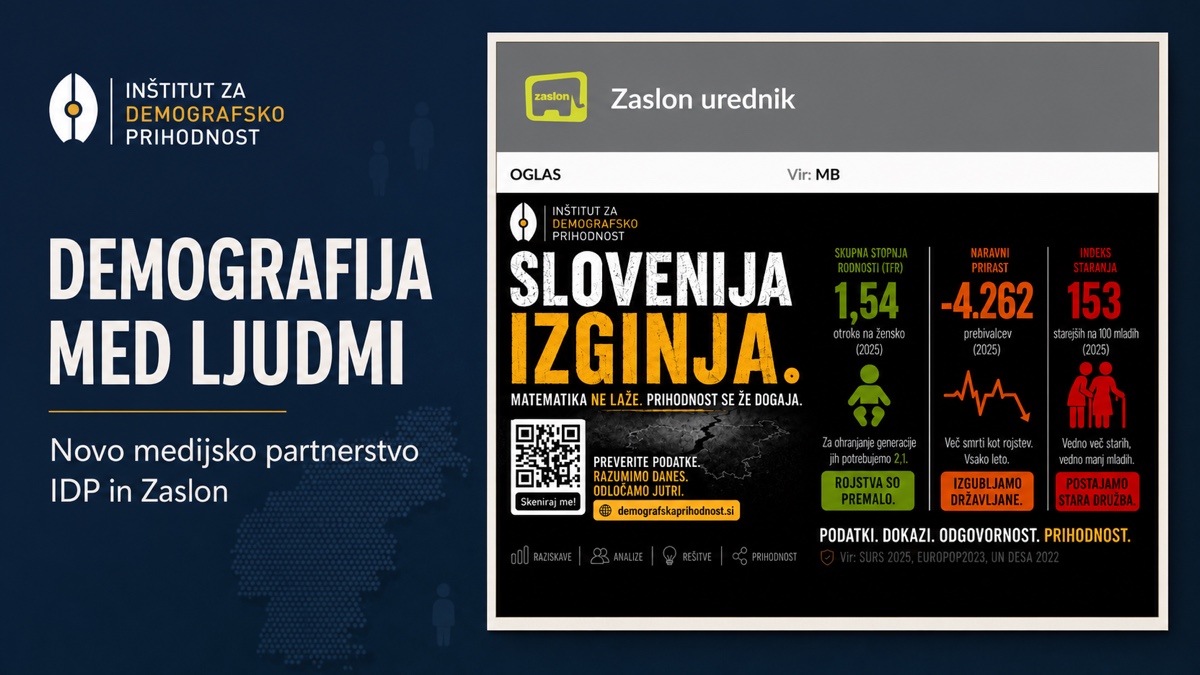
By supporting IDP’s research, public projects and free tools, ZASLON has shown how business can create value for society as a whole.
Read more
The new public communication format successfully completed its first field test before an audience of several hundred visitors.
Read more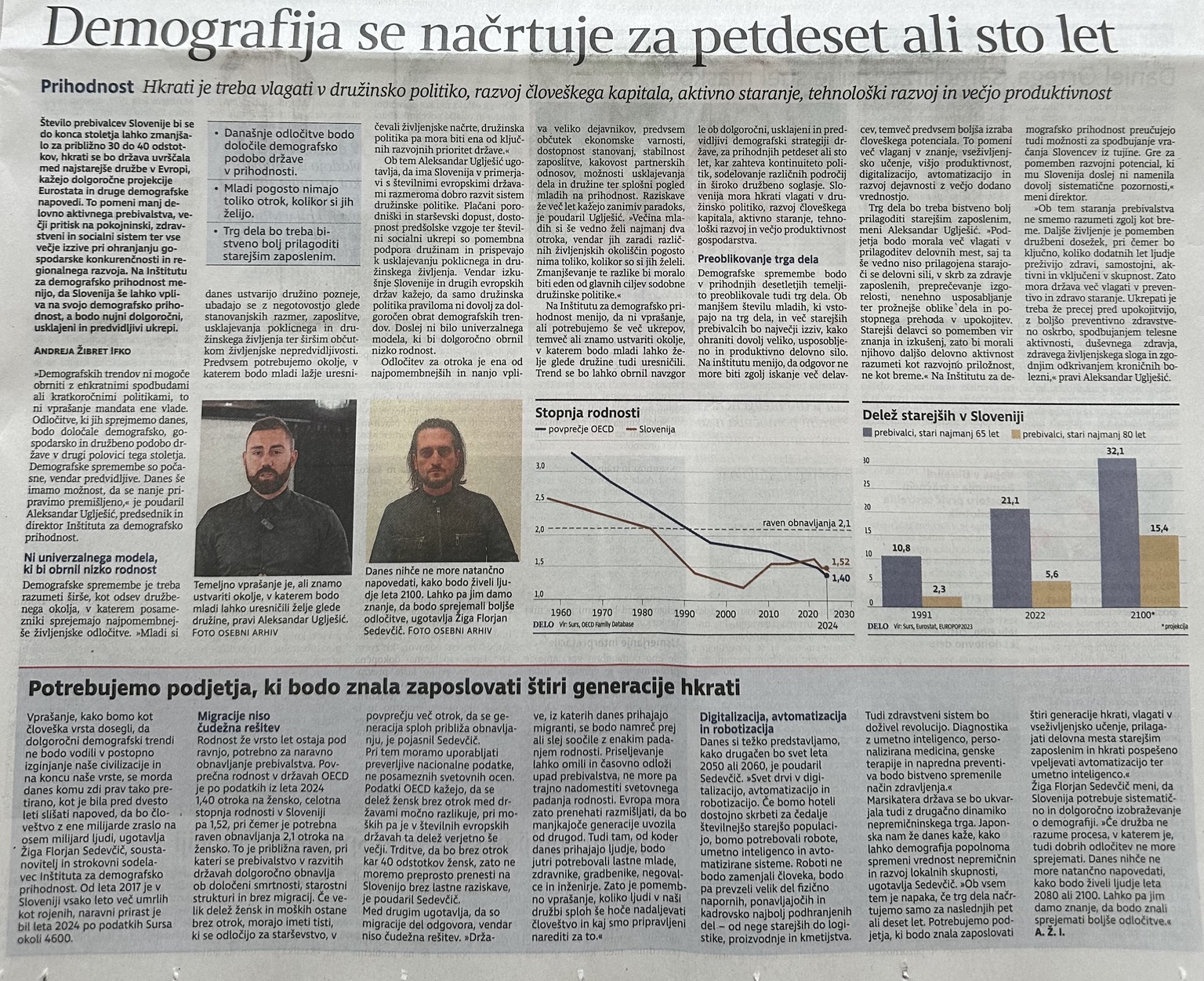
Delo published an extensive article presenting IDP’s views on fertility, population ageing, the labour market and long-term demographic planning.
Read more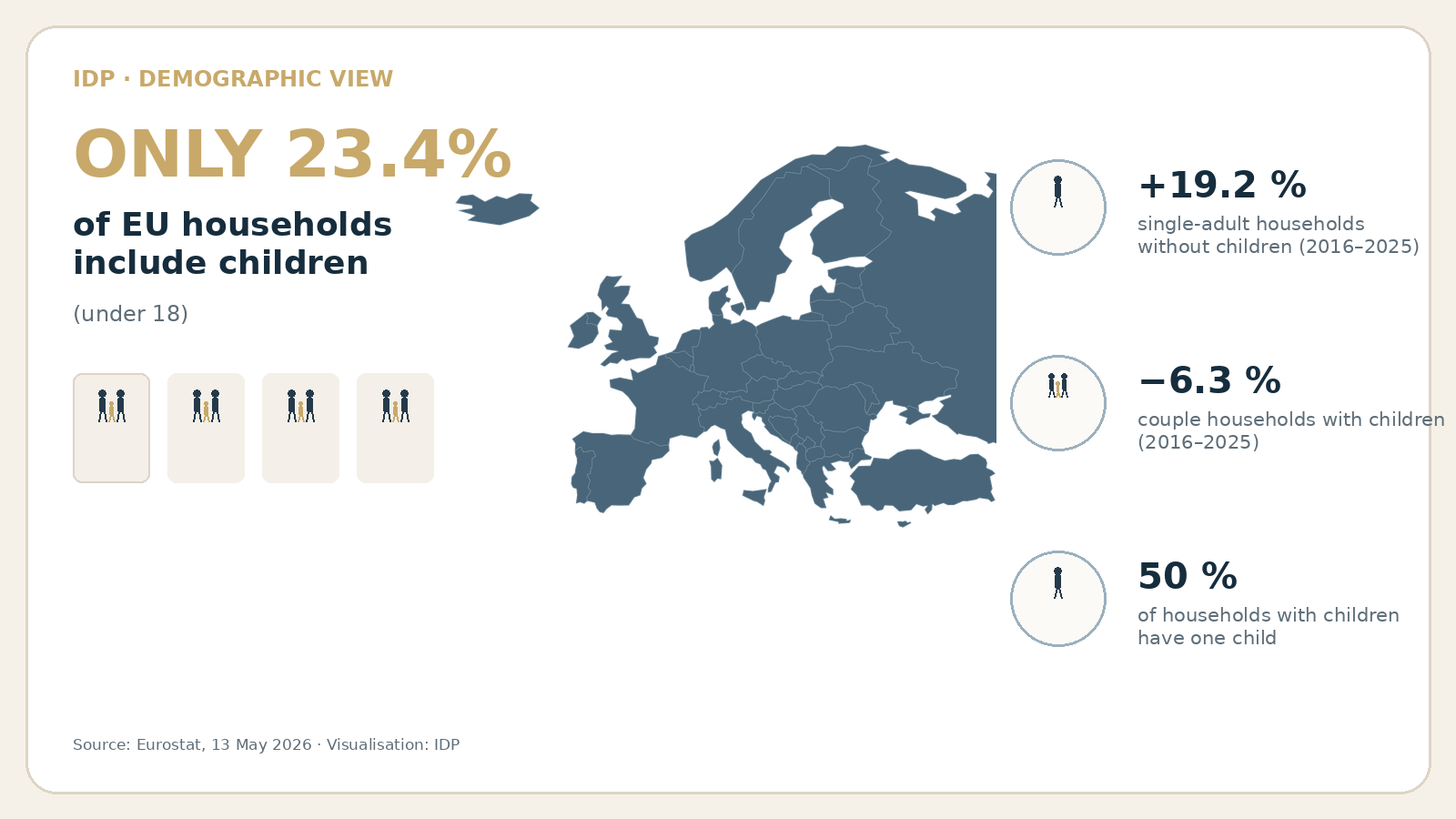
Eurostat data show that children live in only 23.4% of EU households. IDP analyses the link between household structure, young adults’ independence and Slovenia’s demographic future.
Read the analysis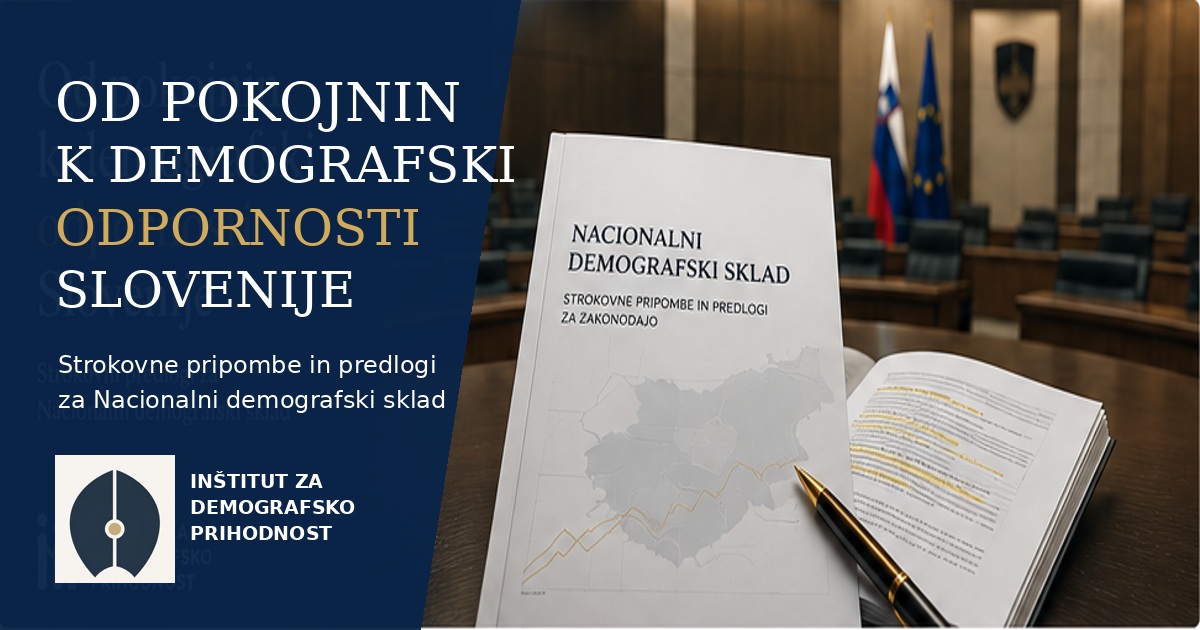
The Institute for Demographic Future has submitted ten systemic proposals to develop the Fund from a primarily financial mechanism into an instrument for pension security, demographic resilience and Slovenia’s long-term adaptation.
Read more
A new analysis of young people’s life-course transitions introduces a temporal perspective on the pathway from independence to first parenthood and proposes a Reproductive Time Index.
Read more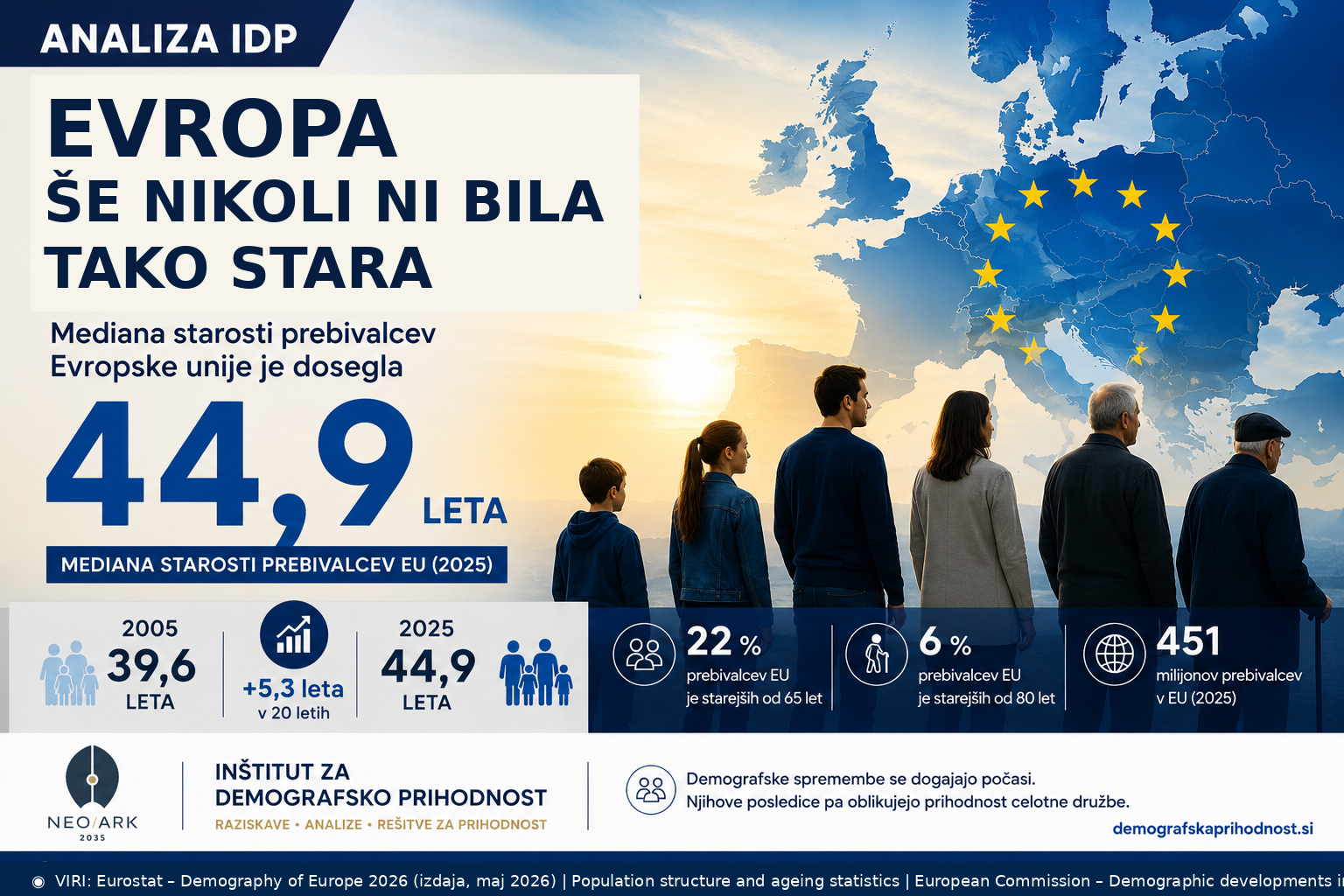
Eurostat’s Demography of Europe 2026 shows that the median age of the EU population reached 44.9 years.
IDP explains why this is not just a statistic, but one of the clearest indicators of Europe’s demographic future.
Read more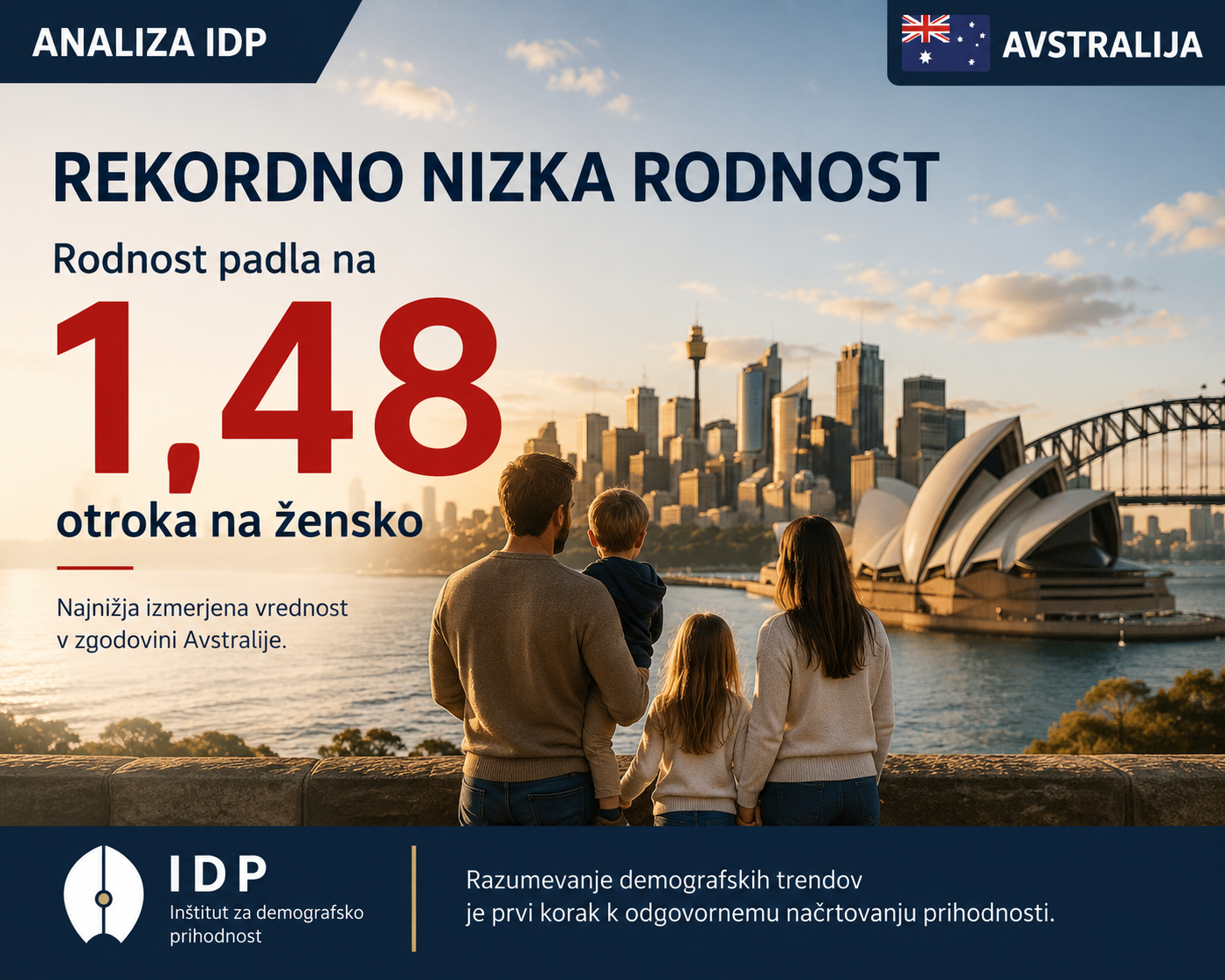
Australia recorded the lowest fertility rate in its history in 2024. IDP analysis explains why low fertility is no longer only a European issue, but a wider challenge for developed societies.
The article connects official ABS data, international comparison and the Institute’s research view on long-term demographic stability.
Read more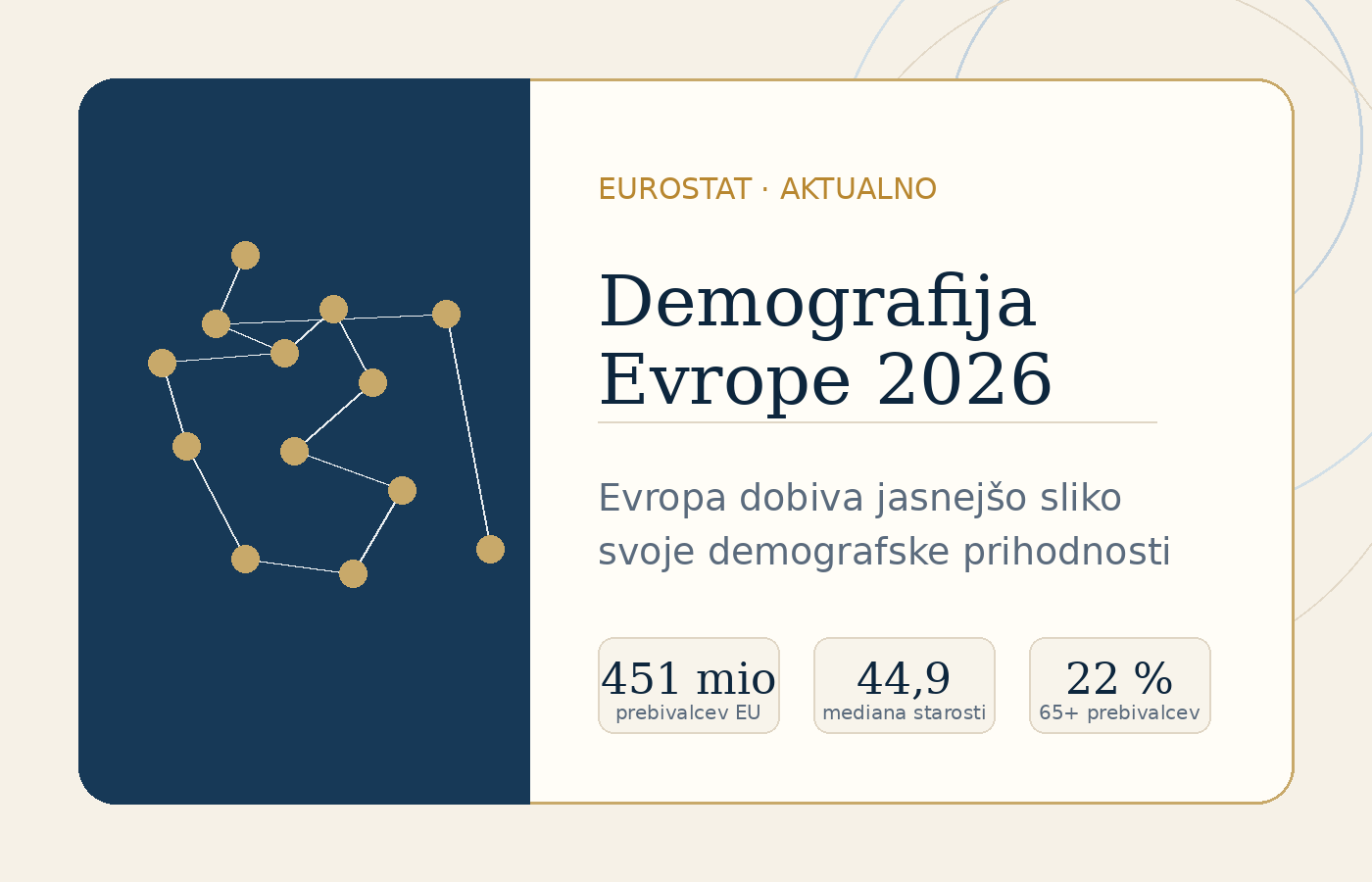
Eurostat’s new interactive publication provides a comprehensive overview of demographic trends in the European Union and helps explain the challenges that will shape society, the economy and public policy in the decades ahead.
The Institute for Demographic Future explains why these data are not merely statistics, but a foundation for long-term planning in Europe and Slovenia.
Read more
The IDP Academy is a new long-term development platform of the Institute for Demographic Future, designed to support future researchers, analysts, project contributors and professionals.
Its first programme is the Young Professionals Development Programme: a structured pathway of learning, mentoring, project work and gradual involvement in initiatives with public value.
Read more
The Institute for Demographic Future (IDF) and Ona-On, a Slovenian platform dedicated to serious introductions and the formation of partner relationships, have established a strategic partnership focused on demographic awareness, social connectedness and the importance of high-quality interpersonal relationships for Slovenia’s future development.
The partnership marks an important step in connecting research, social insight and practical experience in the field of demographic change. Stable partnerships, family connectedness, intergenerational cooperation and social inclusion are among the foundations of a society’s long-term demographic resilience.
Read more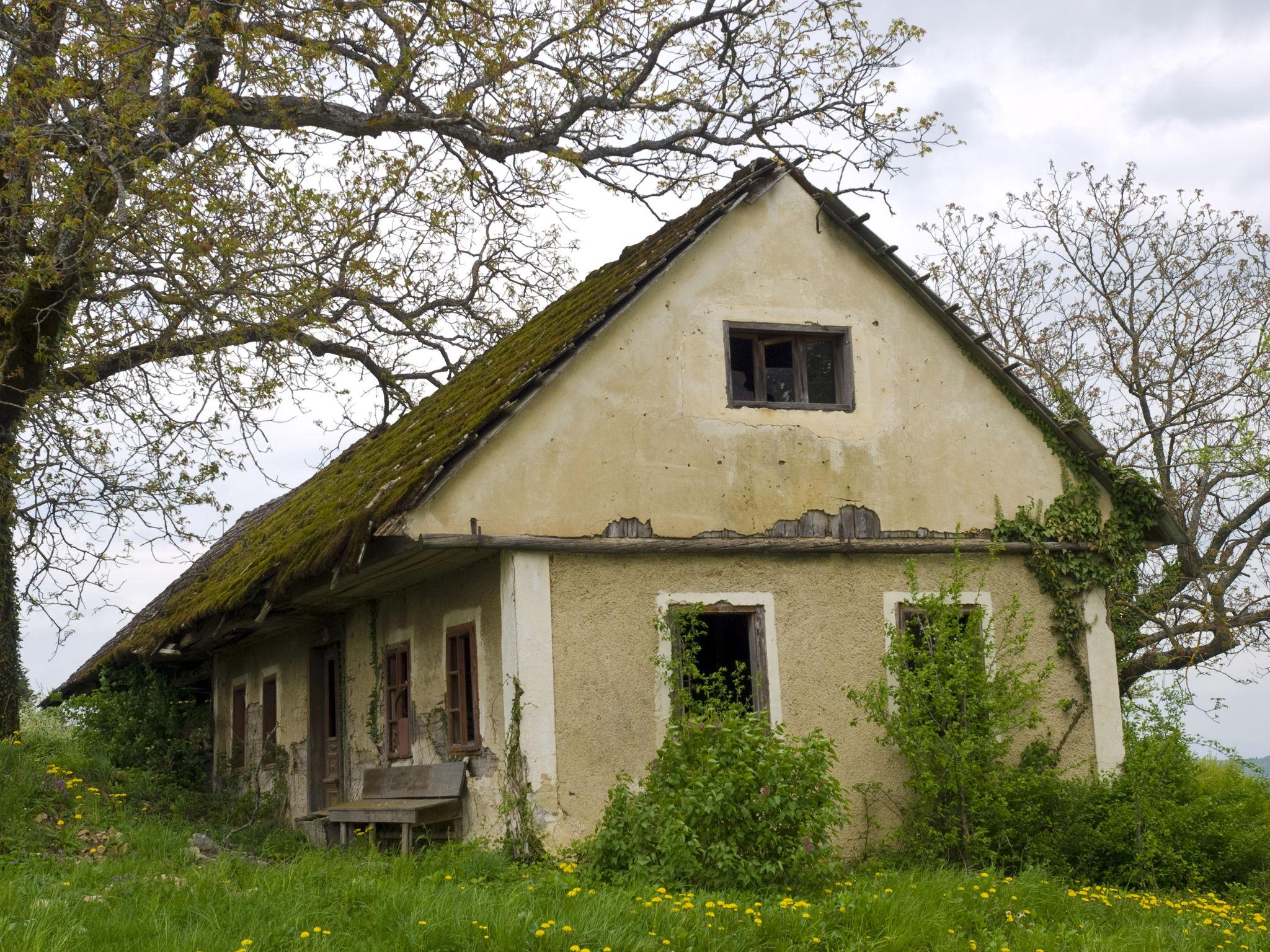
The figure of 58 uninhabited settlements raises important questions about spatial development, municipal services and long-term demographic resilience.
Read more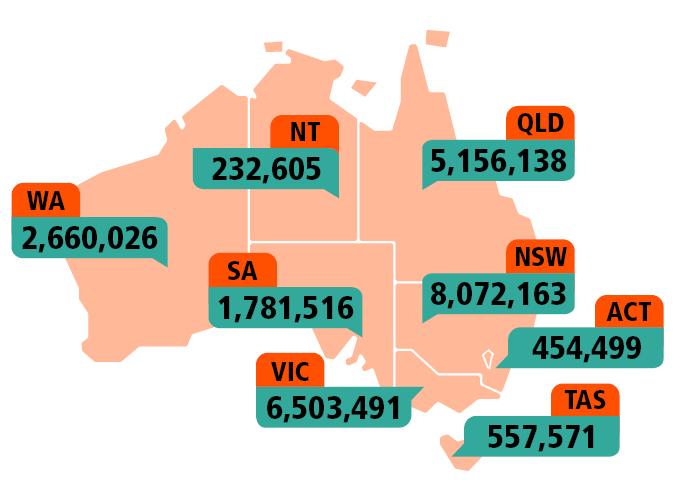
Tasmania shows how low population growth, youth out-migration and ageing can combine into a long-term regional challenge.
Read more
The Institute completed four workshops at the Ptuj Youth and Culture Centre with 73 young participants and strong evaluation results.
Read more
The Institute completed a pilot workshop at Celje Youth Centre with 22 students and an average evaluation score of 9.36/10.
Read more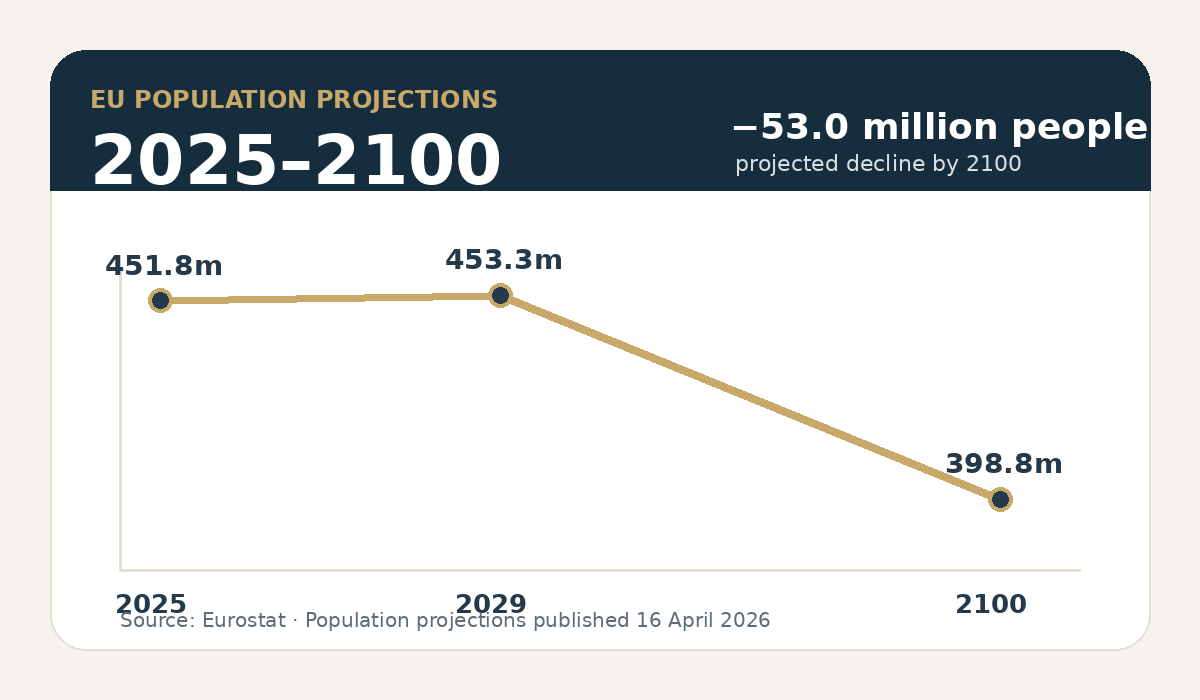
New projections point to long-term population decline, an ageing society and a shrinking working-age population across the EU.
Read update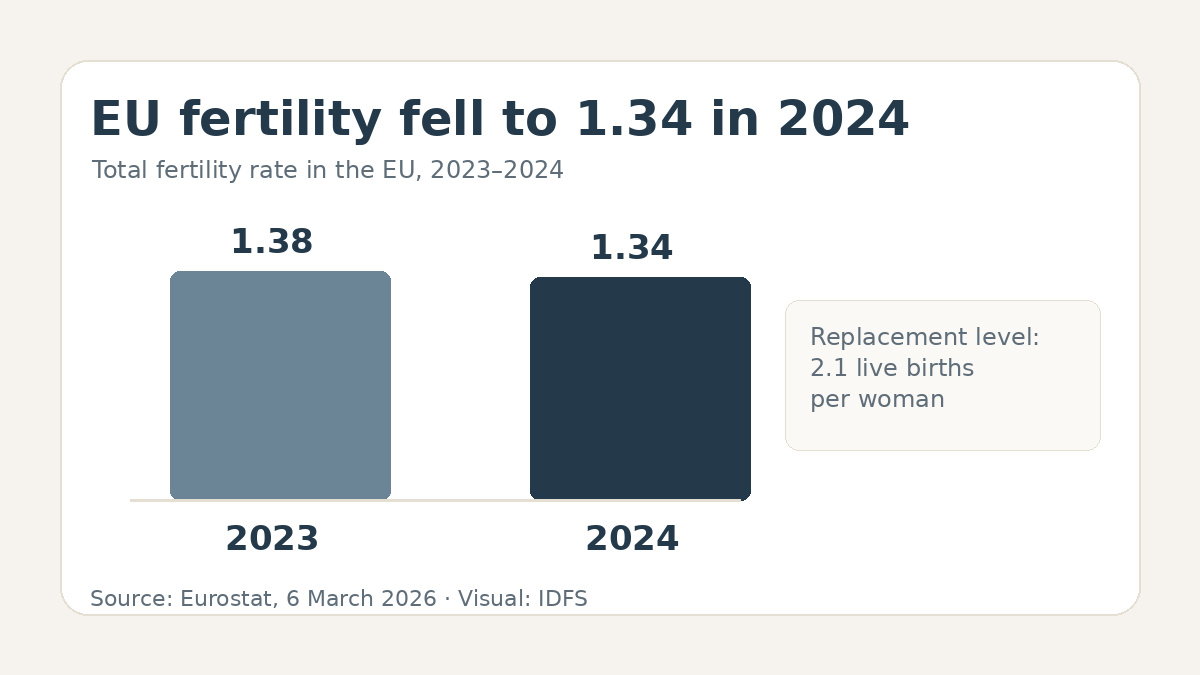
Eurostat reports that the EU total fertility rate reached 1.34 live births per woman in 2024.
Read article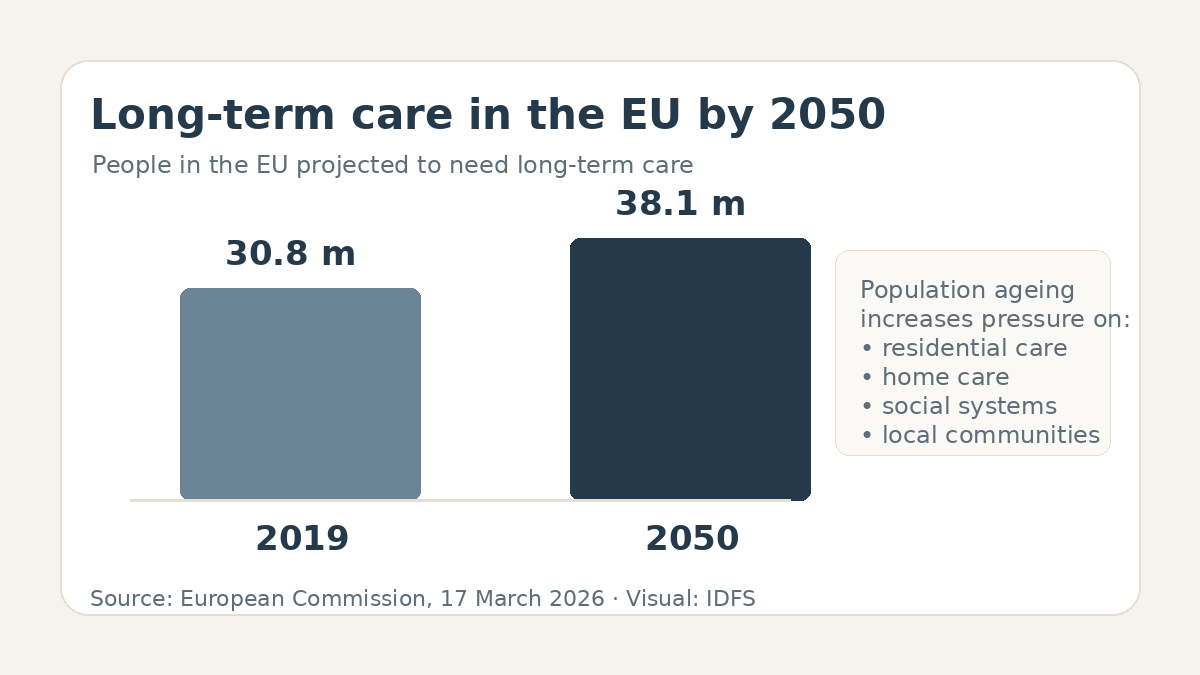
The European Commission warns that population ageing will significantly increase the need for long-term care.
Read article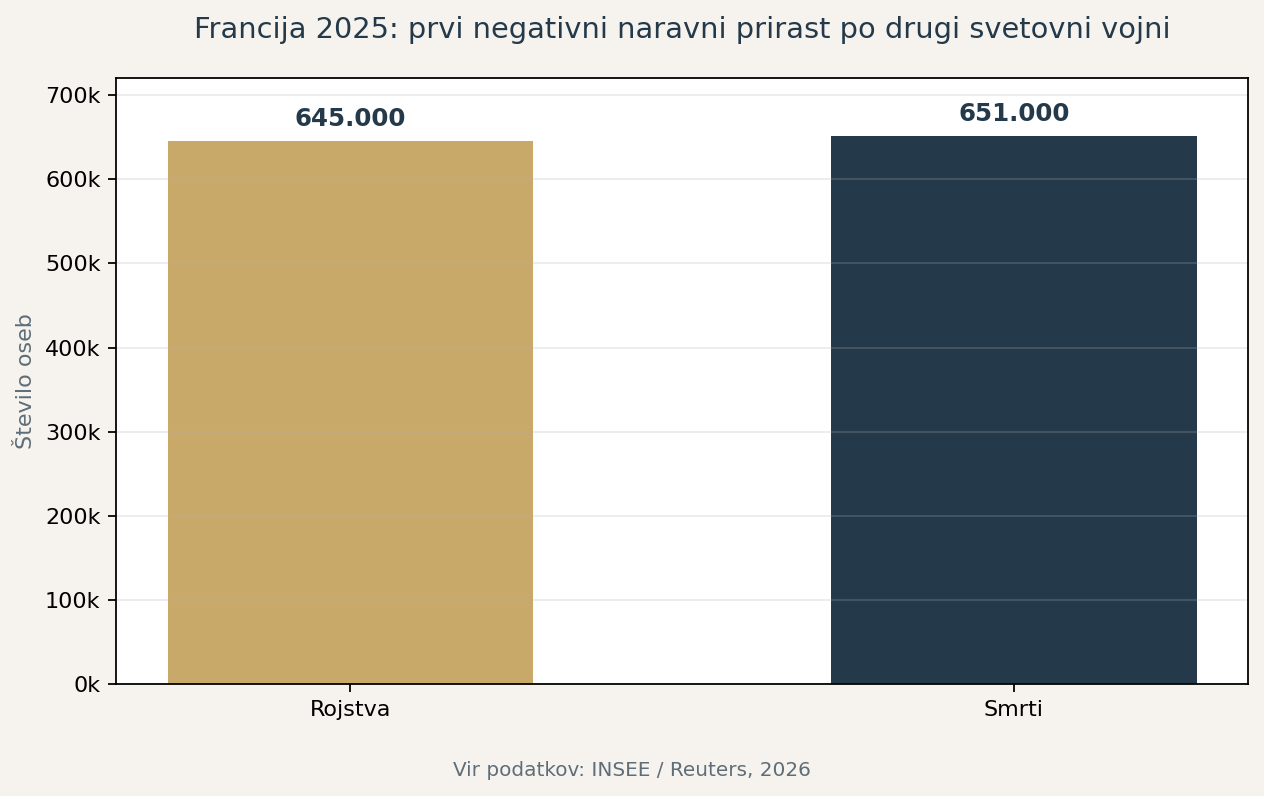
According to INSEE data, France recorded a historic demographic shift in 2025.
Read article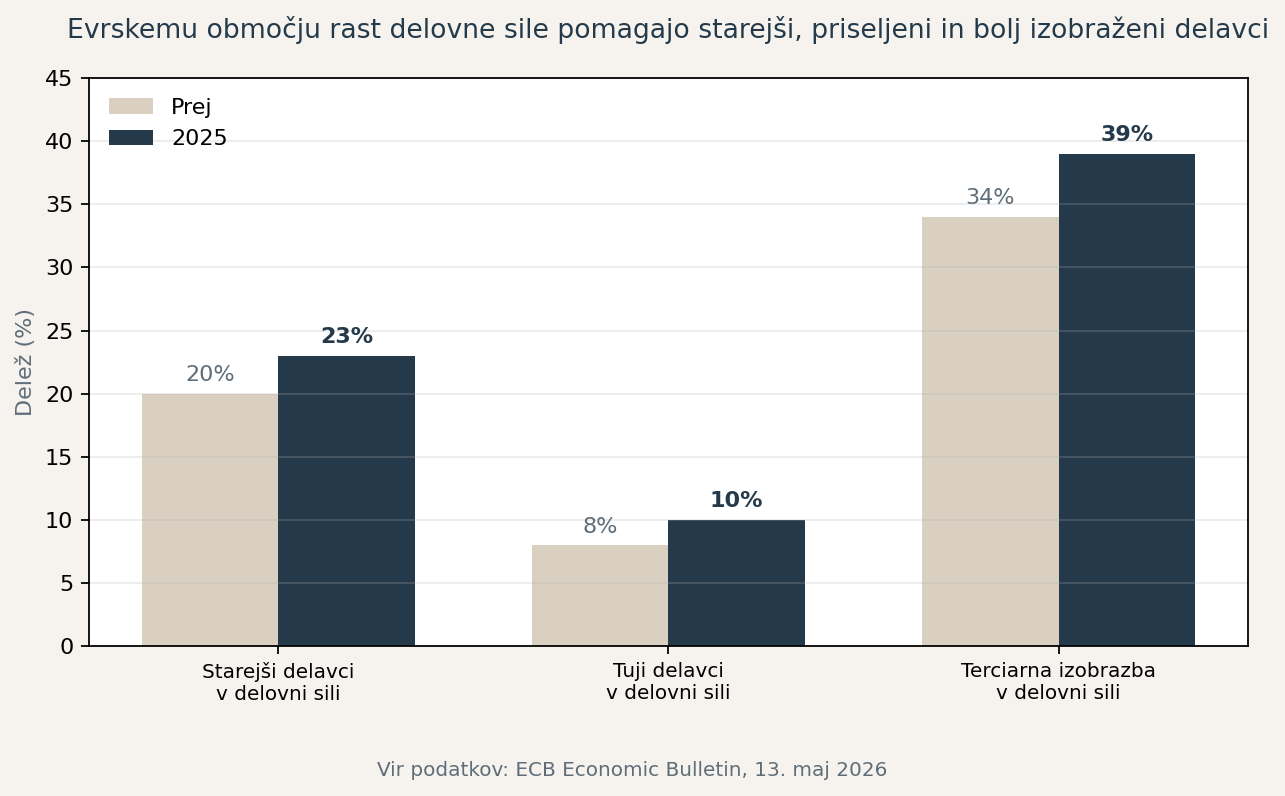
The ECB analysis shows that recent labour force growth has been supported by older workers, migration and educational structure.
Read articleExplore the data, charts and methodology behind the Institute’s research work.