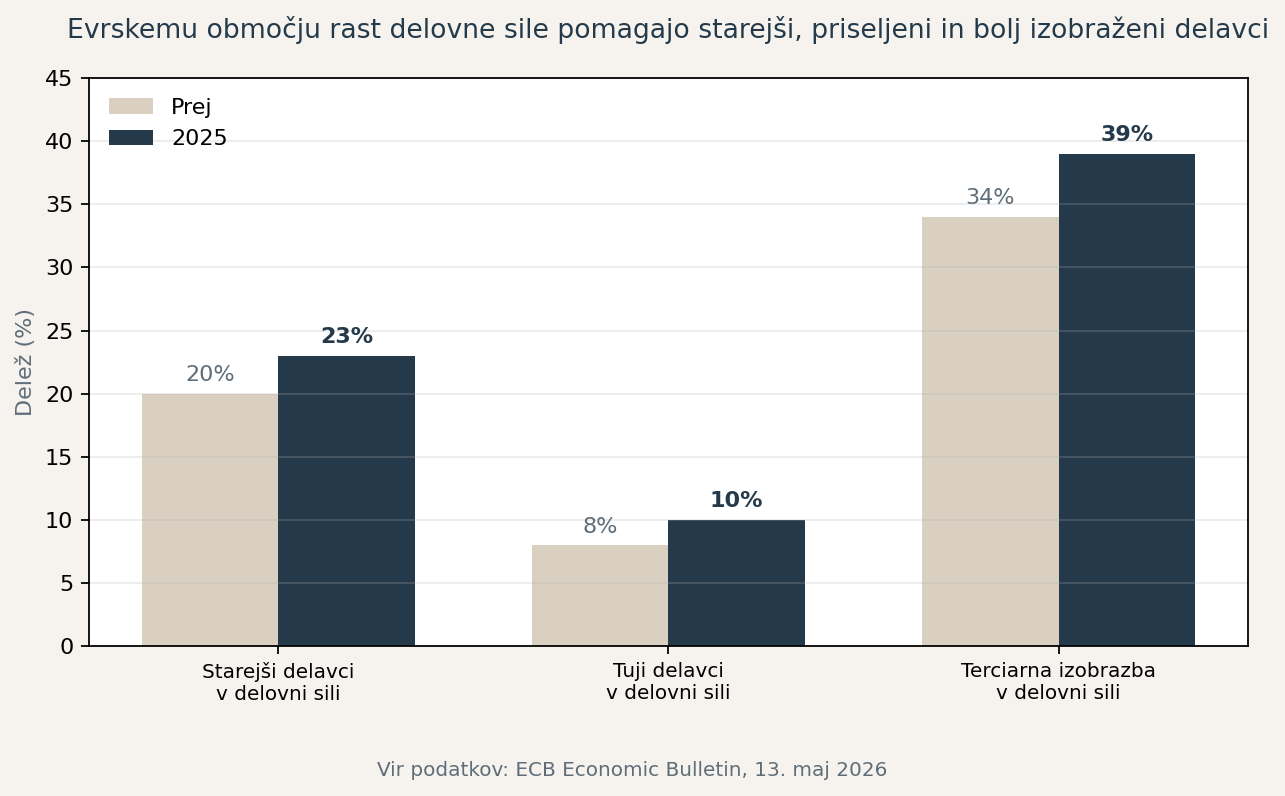
The ECB analysis shows that the euro area labour force has recently expanded partly because of higher participation among older workers, a growing share of foreign workers and a more educated workforce.
According to the ECB, the share of older workers in the labour force increased from around 20% in 2019 to 23% in 2025, while the share of workers with tertiary education rose from 34% to 39%. The share of foreign workers increased from 8% to 10% between 2021 and 2025.
These trends show that Europe is increasingly relying on longer working lives, migration and skills adaptation. However, this does not remove the core demographic challenge: low fertility and population ageing.
For Slovenia, the topic is important because similar challenges are visible domestically: population ageing, pressure on the labour market, regional differences and the need for development projects that support long-term demographic stability.