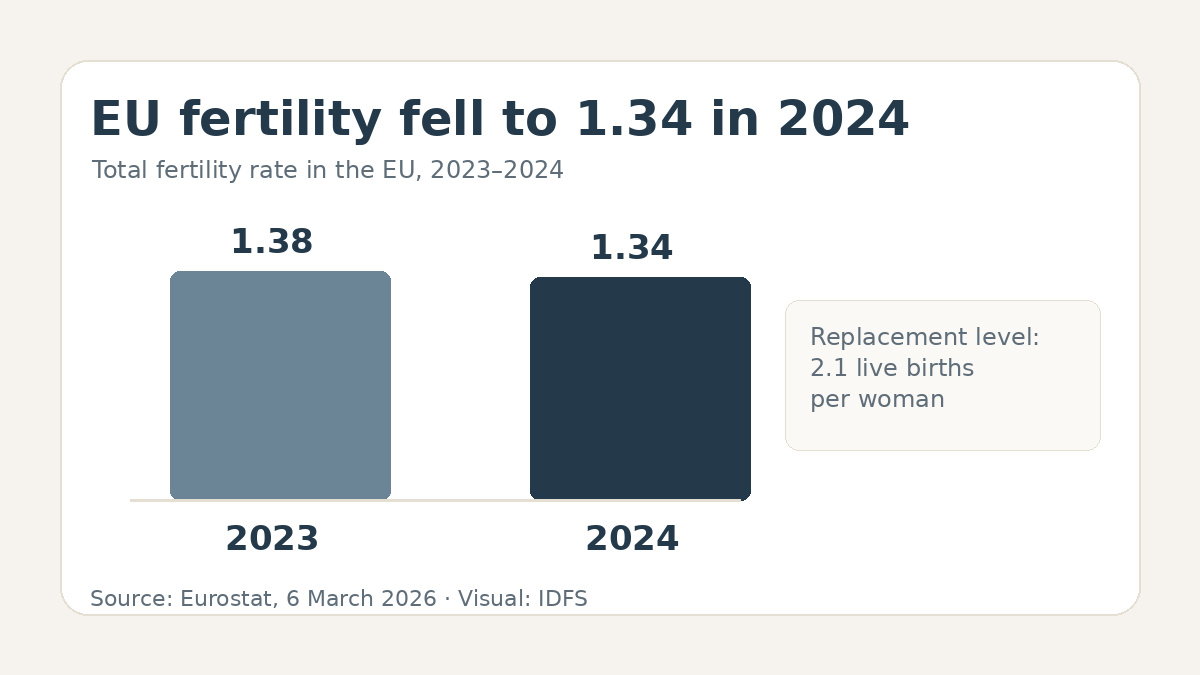
According to Eurostat, 3.55 million babies were born in the EU in 2024, down from 3.67 million in 2023. The total fertility rate decreased from 1.38 to 1.34 live births per woman.
The data confirms a broader European trend of low fertility, population ageing and long-term pressure on labour markets, social systems and regional development.
For Slovenia, the European context is important because domestic demographic challenges are not isolated. Low fertility, regional differences and population ageing are part of a wider European demographic picture.
The Institute for Demographic Future of Slovenia monitors these trends to support research, development projects and long-term initiatives aimed at improving Slovenia’s demographic future.
Source: Eurostat, EU fertility rate at 1.34 live births per woman in 2024, 6 March 2026.